

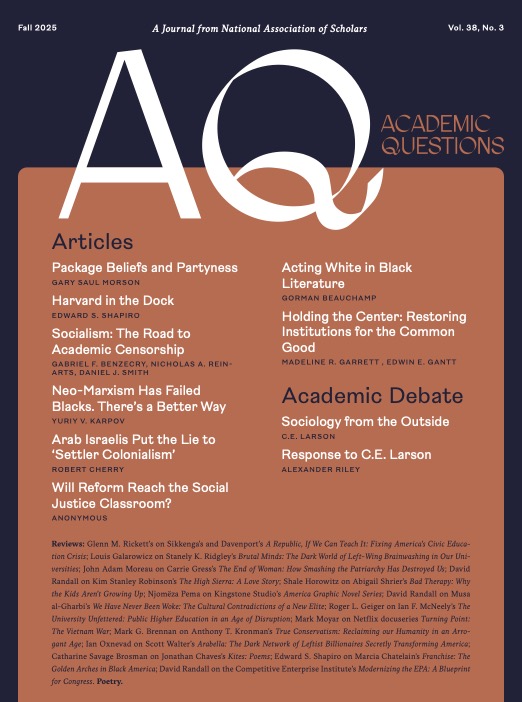
Turning Point: The Vietnam War, Netflix docuseries, directed by Brian Knappenberger, produced by Luminant Media.
On April 30, 2025, Netflix released the five-part documentary Turning Point: The Vietnam War, to coincide with the fiftieth anniversary of the fall of Saigon. The most ambitious Vietnam documentary since the 2017 Ken Burns production The Vietnam War, it has reached senior U.S. government officials, including Special Envoy Steve Witkoff, who said he was influenced by its critique of Henry Kissinger’s Vietnam policy. The fact that a top diplomat is drawing lessons from the documentary makes plain enough the ongoing relevance of the Vietnam War to the nation’s foreign policy and culture. It also renders all the more important the task of publicly correcting any errors in the production.
Director Brian Knappenberger, like Ken Burns before him, sides unequivocally with the “orthodox” school of Vietnam War history. That school, which emerged from the antiwar movement during the 1970s, depicts the war as strategically senseless and inherently unwinnable. Knappenberger ignores the “revisionist” school that arose in the 1990s to argue that the war made strategic sense and could have been won.
Knappenberger interviewed many of the orthodox-leaning historians who appeared in the Burns production. He interviewed just one historian who is generally aligned with the revisionists, George J. Veith, but not on the revisionist findings of his books. Veith told me that after viewing the final product he was “deeply disappointed by the tone, tenor, and overt political bias of the documentary.”
Turning Point is replete with antiwar veterans and antiwar activists, while Americans who supported the war are as scarce as Sierra Club members at an Exxon Mobil board meeting. The interviewee at the very beginning of Turning Point is Scott Camil, a veteran who protested against the war after returning home. The documentary does not mention that only a very small minority of Vietnam veterans took that route; the Vietnam Veterans Against the War claimed just one percent of American veterans as members at its zenith. By comparison, a postwar survey found that ninety percent of American combat veterans said they were glad to have served in Vietnam.
Within the small antiwar minority, Camil belonged to an even smaller minority that advocated violence against other Americans. Camil earned the nickname “Scott the Assassin” during the war for proposing the assassination of prowar congressional leaders. Turning Point does not disclose this.
Knappenberger is more evenhanded in selecting Vietnamese interviewees. Turning Point gives voice to several anti-Communist South Vietnamese, a group often neglected in American accounts of the war, as well as to the Vietnamese Communists who routinely appear. At certain points, the anti-Communists offer compelling explanations for their preference for South Vietnam over North Vietnam.
Like the Burns documentary, Turning Point depicts Ho Chi Minh as a fervent nationalist and downplays his Marxist-Leninist beliefs and actions. This portrayal impugns the perception that Vietnamese Communism was part of an international Communist menace, the perception that drew the United States into the conflict. Some interviewees go so far as to say that the U.S. government should have taken Ho’s side. Knappenberger ignores evidence showing that Ho was dedicated to international Communism and would never have allied with the capitalist United States. He skips over Ho’s service in the Chinese Communist Army during World War II and his friendships with Chinese Communist leaders. Absent from the sections on the Franco-Viet Minh War of 1946 to 1954 is any mention that the ultimate victory of Ho’s Viet Minh depended upon massive Chinese Communist aid.
Non-Communist Vietnamese nationalists are invisible before and during the segments on the Franco-Viet Minh War. Not a word is spoken of the Vietnam Nationalist Party, the leading non-Communist rival to the Communist Party until Ho Chi Minh’s forces killed its leaders in 1946. Nor is anything said about the Bao Dai government, which amassed an anti-Communist army larger than Ho Chi Minh’s army in the early 1950s.
Ngo Dinh Diem, who became head of the non-Communist state of South Vietnam in 1954, receives somewhat better treatment. Several American historians and the novelist Viet Thanh Nguyen attest to his courage, nationalism, and popularity. Others, however, fall back on the negative caricatures that have predominated in orthodox histories.
Historian Lien-Hang T. Nguyen, for instance, contends that Diem’s raiding of Buddhist pagodas in August 1963 amounted to “all out warfare” between the “Catholic leadership and their Buddhist majority.” In actuality, Buddhist generals were as vocal as Catholic generals in encouraging Diem to raid the pagodas. They favored the raids because the Communists were collaborating with politicized Buddhist monks to undermine the South Vietnamese government. After hearing the recommendations of his generals, Diem approved the raids, on the condition that the monks not be harmed. Small numbers of monks would be injured after resisting their eviction, as were some of the policemen who evicted them, but no one was killed in this alleged “all out warfare.”
The driving forces behind the coup that subsequently overthrew Diem were not South Vietnam’s Buddhist generals, but U.S. ambassador Henry Cabot Lodge and American journalists such as David Halberstam and Neil Sheehan. These Americans misunderstood the Buddhist crisis, thanks in part to misinformation supplied by Communist agents like Pham Xuan An and Pham Ngoc Thao, and hence concluded that South Vietnam would fare better under new management. It was the most disastrous miscalculation of the entire war. The coup crippled South Vietnam and incited a North Vietnamese invasion of South Vietnam, which in turn compelled Lyndon Johnson to insert U.S. troops.
In another similarity between the Knappenberger and Burns documentaries, American military achievements receive very short shrift. Turning Point does not describe a single battle involving American forces between their arrival in the spring of 1965 and the Tet Offensive of 1968. Instead, the audience receives only a brief statement from journalist Dan Rather that U.S. forces repeatedly endured setbacks during this period. American forces actually won a nearly uninterrupted string of lopsided victories over the North Vietnamese, some of which had considerable import for the overall course of the war.
First and foremost is the Battle of Van Tuong of August 1965, which forced the North Vietnamese to abort their quest for the rapid defeat of South Vietnam. Numerous other major battles could have been included as well, such as the Ia Drang battles, the Battle of Bau Bang, Operation Hawthorne, Operation Hastings, the Battle of Minh Thanh Road, Operation Wallowa, and the Battle of Dak To. The audience thus has no idea that devastating military losses convinced North Vietnamese leaders to change their tactics and strategy, by means of the Tet Offensive. The omission allows Knappenberger to sustain the myth that the Vietnamese Communists were supremely patient, and hence unstoppable.
Turning Point gives some attention to the Tet battles, and acknowledges that Communist forces suffered severe military defeat. But it ignores Hanoi’s second and third wave offensives of May and August 1968, even bigger defeats that resulted from the miscalculations of North Vietnamese leader Le Duan, whose delusion about military realities rivaled that of Hitler during his final months. The next few years of fighting in South Vietnam receive scant attention, though Knappenberger does include several acknowledgments that the South Vietnamese military improved.
Turning Point allocates slightly under three minutes to the Hue Massacre of 1968, in which Communist forces systematically executed between 3,000 to 5,000 South Vietnamese civilians. Although the description of the event is accurate, the documentary does not address the critical question of whether the top North Vietnamese leadership had ordered or approved it. A large amount of evidence, including the 2008 account of a North Vietnamese Army colonel who was on the scene, indicates that senior North Vietnamese leaders approved of the Hue massacre, and did so in keeping with a general policy of killing South Vietnamese civilians when it served the Communist cause. This policy had been in place since 1960, when Communist personnel had begun assassinating South Vietnamese village officials, government sympathizers, and other civilians deemed to be enemies of the revolution. Turning Point ought to have noted that this policy was the product of Marxist-Leninist utilitarianism, which countenanced violence against civilians in the name of the collective good. Over the course of the twentieth century, this Communist utilitarianism resulted in the deaths of over one hundred million people worldwide.
By contrast, the only large atrocity perpetrated by American troops, the My Lai massacre, was carried out by a few junior officers without orders or approval from above. The slaughter was smaller in scale and much shorter in duration than at Hue, ending after four hours at the command of higher authorities who had been alerted by helicopter pilot Hugh Thompson, Jr. Unlike the North Vietnamese at Hue, the Americans who executed civilians at My Lai would be tried and punished by their own government, a government that meted out justice based on Western concepts of individual dignity and rights, rather than the utilitarian proposition that the state can kill anyone for the benefit of the common good.
The documentary gives My Lai far more airtime than Hue, totaling nearly twenty minutes. During all that time, the audience does not see any of the countless Vietnam veterans who have decried My Lai as an aberration. Instead, they see two of the tiny number of veterans who claim that American troops routinely murdered civilians in cold blood, one of whom is Scott “the Assassin” Camil.
Camil appears again in a discussion of “free fire zones,” areas of heavy enemy activity where American troops could fire without clearance from higher authorities. Although American and South Vietnamese forces attempted to evacuate civilians from these zones, some civilians chose to remain. Camil and a few other interviewees allege that American troops could and routinely did gun down civilians in free fire zones because any Vietnamese was considered fair game. In reality, the American rules of engagement did not permit violence against unarmed civilians in free fire zones, and American officers usually enforced those rules. Following the My Lai massacre, which had taken place in a free fire zone, the perpetrators and some of their superiors tried to cover up the killings because they knew that murdering civilians in cold blood was prohibited even in free fire zones.
Although Turning Point was launched on the fiftieth anniversary of the fall of Saigon, the episode on the war’s end is perhaps the weakest. It lays most of the blame for South Vietnam’s fall at the feet of Richard Nixon and Henry Kissinger. Historian Ken Hughes faults them for planning to abandon South Vietnam after the 1972 U.S. presidential election. Others say that Nixon’s Watergate debacle prevented the White House from saving South Vietnam, though this contention undermines the first allegation, since a White House intent on deliberate abandonment would not have undertaken a rescue.
Dubious White House decisions and Watergate were indeed major factors in South Vietnam’s demise, but Turning Point almost entirely ignores the most important factor—congressional slashing of aid to South Vietnam. On several occasions in 1974, congressional majorities voted to cut aid despite clear warnings from the Defense Department that the cuts would devastate South Vietnam’s military. The documentary neglects to mention that the South Vietnamese military had been fighting well in 1973 and the first half of 1974, at which point the aid cuts began to erode its performance. By the beginning of 1975, South Vietnam’s military position had become untenable because of the supply shortages and congressional prohibitions against U.S. military activity.
In one of the documentary’s most flagrant omissions, Turning Point does not show any members of Congress explaining why they voted to slash assistance to a longstanding ally that was fighting a vicious Communist adversary. Had it done so, it would have exposed the mixture of naivete, self-absorption, and leftist ideology that lay behind these votes.
Knappenberger does not inform viewers that this abandonment damaged America’s alliances elsewhere or emboldened its enemies. He does, however, acknowledge the horrific consequences for the people of South Vietnam and Cambodia. To his credit, he devotes considerable time to North Vietnam’s persecutions of millions of South Vietnamese after the war, the deaths of hundreds of thousands in “reeducation camps,” and the exodus of the “boat people.”
Knappenberger covers the Khmer Rouge’s murders of between 1.5 and three million Cambodians, which were made possible by America’s simultaneous abandonment of its South Vietnamese and Cambodian allies. In the process, however, he takes another cheap shot at the United States. He recycles a version of William Shawcross’s claim in the 1979 book Sideshow that America’s anti-Communist foreign policy was responsible for the Communist genocide. Lien-Hang T. Nguyen says that Nixon’s secret bombing of Cambodia and the American and South Vietnamese incursion of 1970 precipitated the rise of the Khmer Rouge by creating a “vacuum of power.”
What actually precipitated the rise of the Khmer Rouge was a North Vietnamese military offensive in March 1970 against Cambodia’s new Lon Nol government, a government that had had the temerity to ask the North Vietnamese to leave Cambodian territory. The United States and South Vietnam launched the incursion in order to thwart the North Vietnamese offensive, and they succeeded in preserving the Lon Nol government’s control over much of Cambodia. The North Vietnamese Army, however, held on to the rest of the country’s territory, and used it to develop the Khmer Rouge into a powerful fighting force.
Turning Point has the virtue of reminding us that the most important questions about the war have not changed in the past fifty years, contrary to the assertions of many leading academic historians (including some of those who appear in the documentary). When revisionists began challenging the conventional narrative in the 1990s, few orthodox historians offered well-grounded responses. Instead, many of them pronounced that the big questions—like whether all of Asia was at stake in Vietnam, or why South Vietnam ultimately fell—had already been answered. It was time, therefore, to move on to other issues, particularly those in subfields popular with the broader academic community, such as race, class, gender, imperialism, memory, and popular culture. To illustrate the point, the documentary’s producers did not call upon historian Gregory Daddis to discuss the themes of toxic masculinity and sexism in his recent book Pulp Vietnam: War and Gender in Cold War Men's Adventure Magazines but rather asked him about “old” topics like military tactics and war crimes.
At the end of Turning Point, several prominent historians explain that the Vietnam War transformed the United States by shattering trust in the nation’s leaders. It is certainly true that Presidents Kennedy, Johnson, and Nixon repeatedly misled the American people about the war, and that the eventual exposure of their lies exacerbated distrust of the government. But it would have been worth noting that at exactly the same time as Vietnam, the federal government was waging an unsuccessful domestic war with its “War on Poverty,” widely perceived as a failure because of unprecedented urban rioting, skyrocketing crime rates, welfare dependency, and the breakdown of the family. This catastrophe contributed at least as much to the drop in trust of the federal government as Vietnam.
Distrust of politicians is, in fact, one of the historic strengths of the American republic. As the Vietnam War ought to remind us, nations that put unconstrained power in the hands of supposedly good people have perpetrated crimes and injustices far surpassing the worst excesses of the United States. The French revolution provided the first modern example, to be followed by a slew of Communist revolutions, including the four of greatest relevance to the Vietnam War—the Russian in 1917, the Chinese in 1949, the Vietnamese in 1945, and the Cambodian in 1975. The inhumanity of those revolutionary governments deserves inclusion in any history of the Vietnam War, for it served as the single most potent impetus for Vietnam and all of America’s other costly Cold War enterprises. This is worth remembering whenever a documentary producer or pundit or politician finds more to like in America’s enemies than in America.
Mark Moyar is William P. Harris Chair of Military History and Director of the Center for Military History and Strategy at Hillsdale College.
Photo by Annie Spratt on Unsplash