

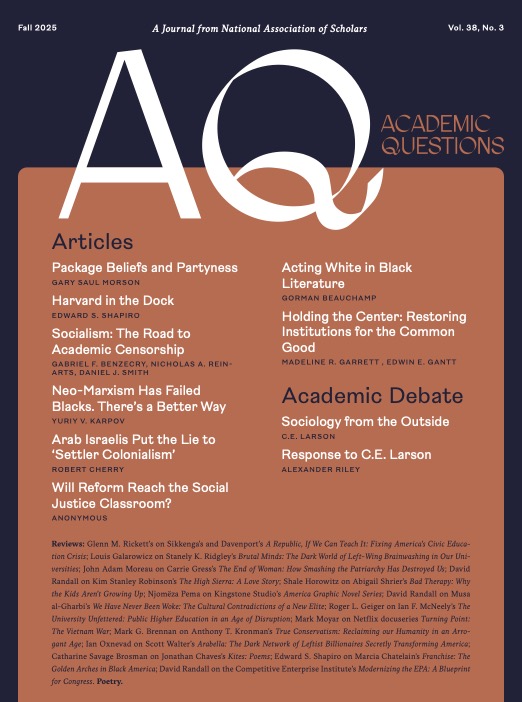
America Graphic Novel Series, Kingstone Studios, Twelve volumes. $1.99 to $14.99 each.
Apart from Scooby-Doo, nothing quite got me to sit down and zip it like Liberty’s Kids. A 2002 PBS animated children’s series, Liberty’s Kids followed the adventures of three kid reporters working for Ben Franklin’s Philadelphia Gazette as they watched the American Revolution unfold. My fourth-grade teacher allowed us one episode every two weeks as we learned about the history of the American Revolution and the Founding. Now fourth grade might have ended ten years ago but I still vividly remember that class. I remember the genuine interest and appreciation for the American political experiment it instilled me—as much appreciation as a ten-year-old can have, that is.
This is all to state the obvious: supplementing academic study with engaging and educational media proves particularly helpful with children. Kingstone Studios seems to agree. On July 4th of 2024 the Florida-based illustration company released a “groundbreaking new graphic novel series” about the American Founding “set to captivate readers nationwide.”1 In what Kingstone claims is “the most complete graphic adaptation of American history ever” all twelve comics present the intermediate historical events between the first attempts at Puritan and British Charter colonization and the drafting of the U.S. Constitution.2 I recently put that history major to good use and read all twelve of these “educational and patriotic comics.”3 Here’s what I thought.
Beginning with the structure, each of these comics ends at around thirty pages and features one narrator, introduced at the comic’s outset in an illustrated cast list, who supposedly retells his own experience and contributions to said event. Abigail Adams, for example, acts as narrator for The Gathering Storm, which describes colonial frustrations with the British Intolerable Acts while her husband narrates The Declaration which, you’ll be shocked to learn, concerns the Declaration of Independence.
Per Kingstone’s rating system, as explained on their website, nearly all these comics appear intended for teenagers thirteen and above. However, Kingstone also concedes that this series falls between the elementary and middle school Flesch-Kincaid grade levels. In material and maturity, these comics feel to me more attuned to the reading level and interest of children between the ages of ten and thirteen—potentially even slightly younger. There doesn’t seem to be anything in any of the twelve graphic novels that would scandalize a nine-year old.
There is little question of the effort that went into this series and which Kingstone claims constituted “an unprecedented collaboration between American history and modern storytelling.”4 Their cartoon depictions are impressive and the intention to make American history more digestible and engaging for younger audiences commendable. However, as a former comic-lover myself, reading this series felt distinctly different than reading other traditional graphic novels. While certainly providing historical content with excellent illustration, I found these comics could not quite toe the line between dry historical recitation and actual entertainment.
To begin with, these comics suffer from their own brevity, making it difficult for each one to simultaneously craft an engaging character-driven narrative while still presenting all the historical facts relevant to the subject matter. As a result, the comics more often than not prioritize the latter, feeling too short or dense in the sheer number of events they relate and eventually abandoning all attempts at character focus or development. Seeing as none of the twelve comics are particularly large in size, by further restricting each to thirty pages, Kingstone did not have sufficient time to explore any of their characters or narrators more intimately. Further, the thirty-page cut-off further makes these comics look less like the average graphic novel (the absolute shortest of which usually end at fifty pages)—and more like pamphlets.
Even the supposed narrators do not always get consistent screen time, nor do the comics always emanate exclusively from their experiences. Sometimes even the insertions of the narrators’ personal experiences feel forced or random. Sometimes history is shoe-horned in, even when it does not make sense for the subject addressed in the particular comic. One example of this principle occurs in The Declaration. This comic focuses on the reluctant but rising pro-revolutionary sentiment among the colonies and the eventual justification the colonies offered for the Revolution through the Declaration. At the midway point of the comic, the Revolution has not even formally begun. Suddenly however, the comic interrupts this narrative to begin describing colonial debates over the best type of government the colonies ought to adopt once the North American colonial territory becomes an independent nation. This subject—the question of what eventual independent government pro-independence colonies favored—never comes back up again. While such debates certainly occurred contemporaneously with increasing revolutionary sentiment, randomly mentioning these within the comic while also providing no connection between these debates and colonial reluctance to revolt merely served to convolute the text.
Instances like this made this comic and the series generally, feel more focused on simply relating all major historical facts and developments within the time period rather than creating a cohesive and compelling narrative arc. More plainly put—it felt obvious to me that these comics tried to cram as much history as possible in without actually crafting an individual story. This renders the series more a collection of illustrated histories rather than traditional graphic novels.
None of this is to suggest that illustrated histories are completely useless. I imagine that this series would work very well within a classroom setting. I certainly might have appreciated something like this in the fourth grade as a supplementary reading in my American history class. For example, the final comic in this collection is The US Constitution, which features a teacher as its narrator. This unnamed individual guides readers through the Constitutional debates as well as the history and text of each Constitutional article and amendment. This comic serves as one of the only two in the collection which consistently uses its narrator as the lens by which readers experience the history related to them. Where the rest of the collection sometimes feels like historical recitation disguised as comics, this one is honest with its readers. Kingstone clearly intended The US Constitution to operate as an extended lesson—and it succeeds. The text remains educational and does not bite off more than it can chew. Rather than revealing any personal information about its teacher-narrator or half-heartedly attempting to frame itself around any one character’s plot arc, The US Constitution exclusively uses its narrator as a vehicle for breaking down every facet of the constitution.
However, per their own admission, Kingstone hoped to create more than a glorified lesson plan for their readers; they claim to have created fun and engaging but informative accounts of the American founding for teenagers. As a former teenager myself, I am not sure how much fun I had reading all of these books. They’re not soul-sucking, for sure, but the truth is, while I might have enjoyed these comics if introduced to them in my middle school American history classes, I do not know that I would have reached for them on my own. And I definitely do not think that the average teenager today would either.
Nonetheless, what these comics sometimes lack in compelling narrative, they make up for in very obvious messaging. Conservative Christian parents, as well as any conservative private or religious schools, will likely appreciate this series. Kingstone is a Christian company which claims to specifically align with American Baptist doctrine. These comics do not shy away from crediting Christian inspiration and divine providence for the American Founding and explicitly favor a religious interpretation of American history. The teacher-narrator of The US Constitution declares James Madison’s insistence that Americans recognize their submission to “the governor of the universe” before their submission to earthly governments and authorities, “wise words.” (1)
Furthermore, not only do various narrators and characters profess religious devotion, but several comics either begin or end with a posture of gratitude to “Providence” or God. In Acts of God, the first of the series, William Bradford insists to readers as the narrator that the pilgrims came to America “seeking freedom and carrying the gospel of Jesus Christ,” and that while “Hardships followed … so did the grace of God.” (1) The series’ second comic, New England, follows John Winthrop as narrator, who insists that the Puritans and American settlers “were doing God’s will,” such that he “did not repent of ever coming to this land.” (1)
Kingstone further credits the American founders for trusting in the Christian God in penning critical American political documents such as the Declaration of Independence and the U.S. Constitution. “We must depend upon Providence or we fail,” (1) claims John Adams as narrator of The Declaration. This comic later depicts the founders as intentionally adding references to God within the Declaration and ends with Adams insisting that the American political experiment merited the sacrifice of violent revolution:
I can see the rays of ravishing light and glory, I can see that the End is worth more than all the Means to get there. Maybe someday we will regret what we did here, but I trust in God that we shall not.” (The Declaration, 30).”
The clear religious messaging strongly implies Kingstone intends its readers to contemplate the role of divine favor in uniquely supporting and aiding the American experiment. John Winthrop is directly quoted on the last page of New England, the second in the series, declaring that the Puritan colonies acted as “a city built on a hill,” with “the eyes of all people … upon them.” (30) Kingstone further frames contemporary political issues, like the recent overturning of Roe v. Wade by Dobbs v. Jackson Women’s Health Organization, in a conservative, Christian light. The presentation of Roe’s implications in The US Constitution is notably critical. Featuring the sympathetic illustration of a nearly fully developed fetus sucking its thumb in utero, the teacher-narrator insists that Roe “created” rather than “interpreted the law” (19) noting that the Constitution “doesn’t mention abortion,” (19) as a protected right. By the time the teacher explains that Dobbs finally overruled Roe, readers clearly recognize that he, and by extension, Kingston, agree with this ruling.
Aside from its religious and political messaging, this series has a clearly-presented argument relating to the American political experiment, tracing the presence of the self-governing principle in American political life from early seventeenth century colonization to the official founding of the republic. Kingstone spends time acknowledging the development of freemen’s assemblies in the early chartered colonies and constitutions codifying the protection of individual rights, such as Massachusetts’ 1641 Body of Liberties.
This series presents the argument that a longstanding political tradition of zealous defense of autonomy existed within Colonial America, emphasizing how consistently colonists protected their representative autonomy from Parliament during the Dominion, and later having Abigail Adams, narrator of The Gathering Storm, eventually citing these colonies’ example as the justification for revolution: “Our Puritan ancestors did not give up the right of self-government when they came to America. They established a right of self-rule!” (19)
Finally, these comics make a tactful and effective effort in their depiction of more sensitive topics such as American slavery or colonial conflict with Indigenous Americans. Kingstone exhibits little influence from critical race theory or other trendy academic research models, instead staying careful to castigate slavery while crediting America’s founding political, social, and religious philosophy for having eventually led to its abolition. Kingstone further places no unique blame on the American colonists or founders for their practice of slavery. While noting the duality of figures such as Thomas Jefferson, who repudiated the institution while still practicing it, Kingstone levies no charges of cruelty or hypocrisy against the American founders, writing in The Declaration that:
Jefferson was torn over the issue of slavery. But whatever we make about his failure to practice what he preaches, there is no doubt: Those words, “All men are created equal,” helped to rid the country of slavery almost 100 years later. Some might even say it’s a miracle he inserted the [anti-slavery] clause in the original Declaration of Independence. (31)
Kingstone remains similarly sensitive towards their description of Indigenous-American relations while still adopting a conservative historical approach. The first three comics in this series, Acts of God, New England, and The Wilderness, recognize Indigenous assistance to early New England colonists. They offer continual descriptions of peaceful relations between New England colonies and the local Indigenous tribes, with The Wilderness in particular featuring several Indigenous characters in its supporting cast and acknowledging the vital role that the Wampanoags played in defending the early Rhode Island colony.
The description of conflict between the Indigenous people and the colonists or the English remains generally neutral. While The Wilderness describes various Indigenous-English battles, Kingstone represents the devastation faced by both sides, characterizing the armed conflict as a tragedy. These comics similarly remain careful to contextualize all conflict, offering all economic and political reasons for these battles rather than blaming mere racial tension or racism as an explanation. In this vein, the comics do not depict Indigenous Americans as a monolith collectively resisting the white man. Rather, they take care to demonstrate that inter-tribal conflict did exist and often led different tribes to support colonial, British, or French forces whenever it suited their own territorial or economic interests.
Given increasing concern about the rise of critical theory in American classrooms, Kingstone certainly makes a valiant effort at incentivizing children to better appreciate their country’s origins. Safe to say, the media does have a market for promoting engaging and informative presentations of American history. These comics are not a bad start by any means. Parents and conservative educators can rest easy knowing their children will find an orthodox conservative, religious message within this series.
What we’re missing here though is a good story. Conservative Christian children’s entertainment can’t try to fight theory with theory—this doesn’t move children. Maybe my nostalgia and bias for Liberty’s Kids informs my position too much, but I do not see why patriotic American artists, filmmakers, or in this case, comic publishers, can’t repeat that kind of success and innovative storytelling today. Tell a good story and the message becomes abundantly more compelling. Kingstone is right to recognize that American history is ripe with compelling stories—it’s time to tell them somewhat more compellingly.
Njomëza Pema is a recent graduate of Hillsdale College.
1 “U.S. Comics Launched By Kingstone Studios On Independence Day,” PRWeb.com, July 2, 2024,https://www.prweb.com/releases/us-comics-launched-by-kingstone-studios-on-independence-day-302188253.html
2 Ibid.
3 Ibid.
4 Ibid.
Photo by Tono Boys on Adobe Stock